

- HOME
- PRODUCTS
- SOLUTIONS
-
RESOURCE

 Technology

 User Cases
- NEWS&EVENTS
- CONTACT US
-
ABOUT US
Technology
User Cases
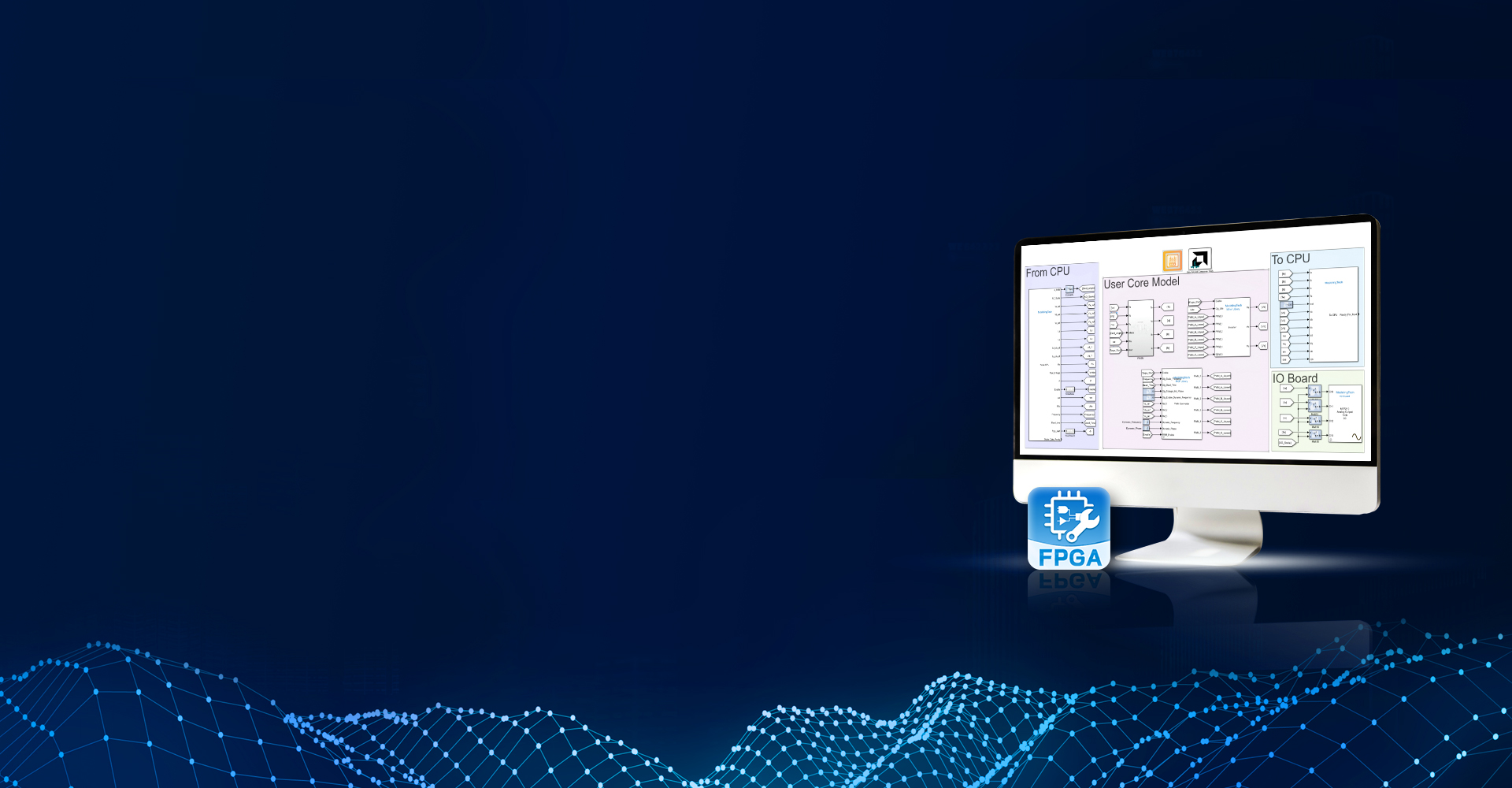
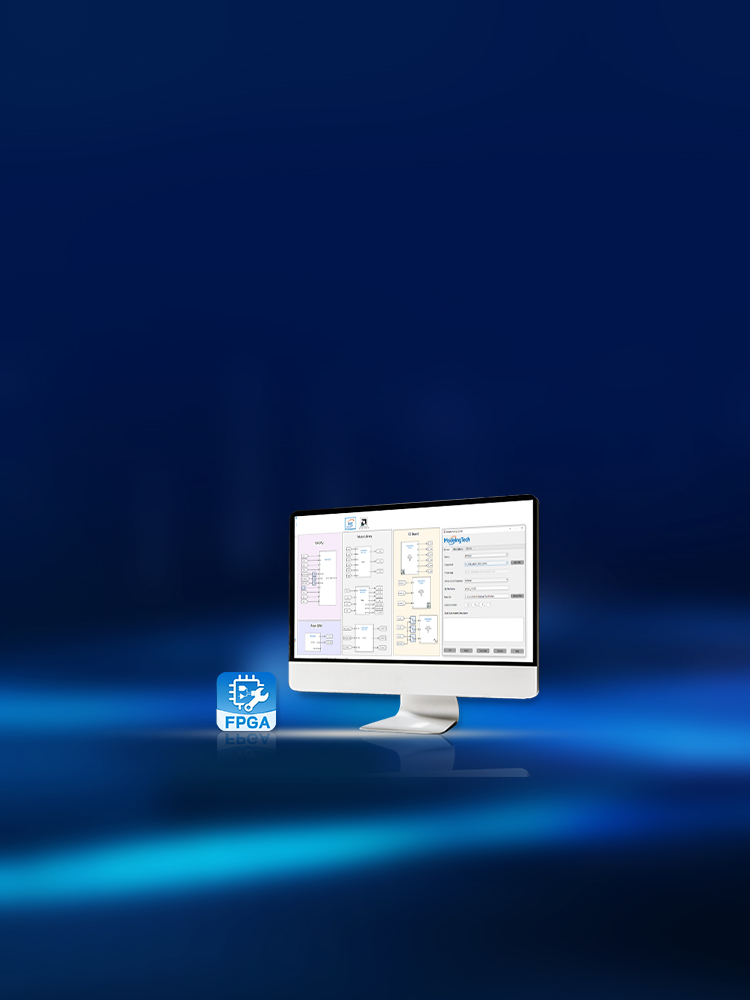
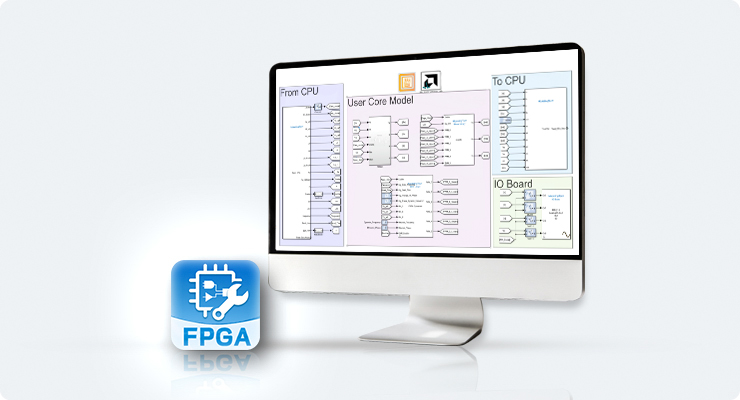
This software is designed for building and compiling custom models. It delivers a real-time compilation framework compatible with multiple Xilinx chips as well as CPU-FPGA communication interfaces. It integrates an extensive library of model components, analog-to-digital conversion modules and data interaction modules, enabling synchronous operation of CPU and FPGA models to fulfill users’customized modeling requirements.
Combining ModelingTech’s exclusive FPGALab component library and the base Sysgen component library, users can construct custom FPGA models via graphical drag-and-drop operations to meet fully customized simulation design demands.
The platform provides complete CPU-FPGA communication modules and I/O interface modules to support synchronous execution of CPU and FPGA models. Its data transmission modules enable multi-channel large-scale data exchange between CPU and FPGA.
After model construction, users can trigger one-click compilation to generate FPGA configuration files. Users only need to import self-programmed control algorithms and FPGA configuration files, then download them to real-time hardware to rapidly launch real-time simulation of custom models.
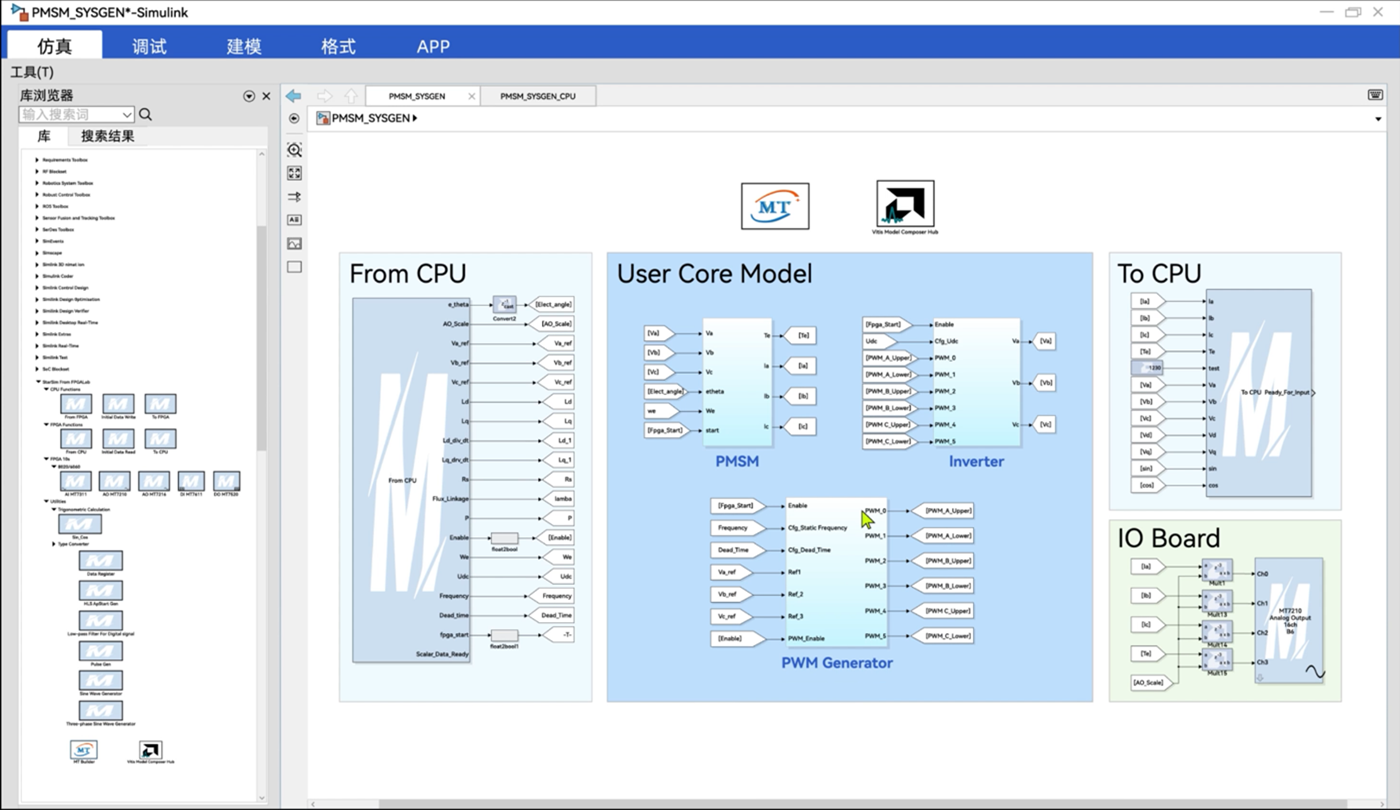
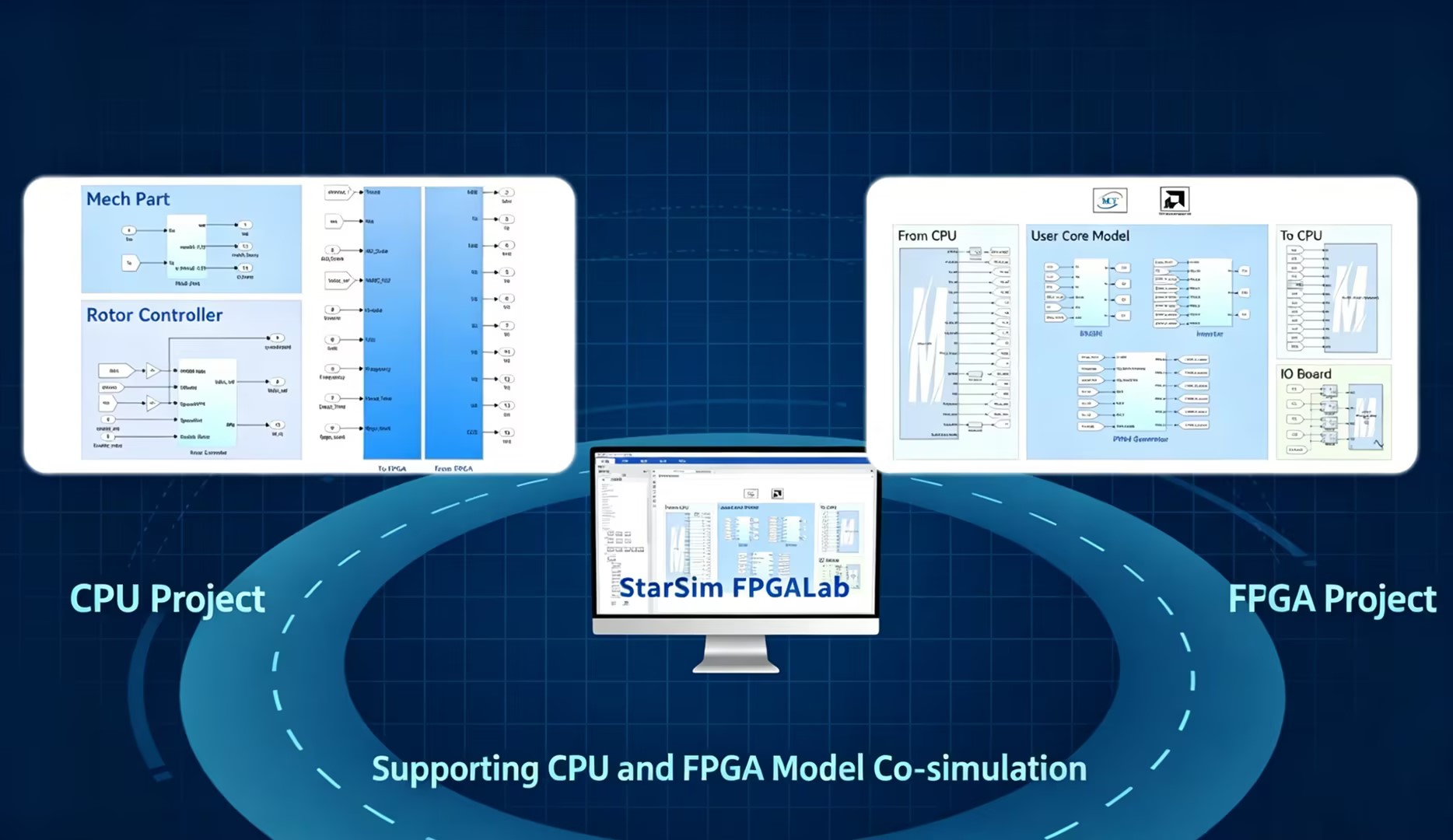
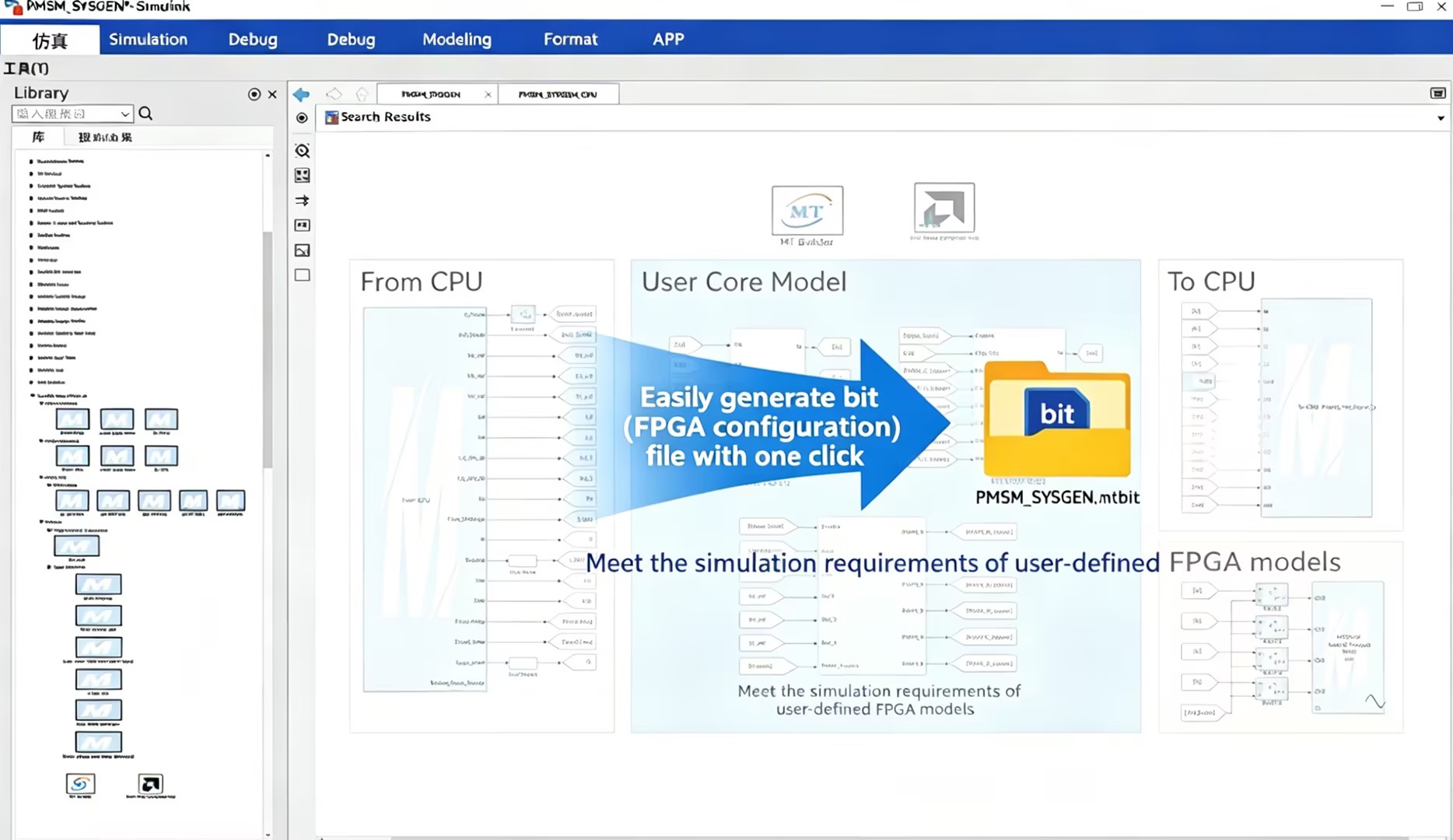
Take a PMSM motor model built with System Generator as an example: the mechanical part is deployed on the CPU model, while the electromagnetic part runs on the FPGA model.
The FPGA calculates motor currents and electromagnetic torque based on the electrical angle and angular velocity transmitted from the CPU, then uploads the calculated results back to the CPU.
The CPU generates updated electrical angle and angular velocity values according to the electromagnetic torque data received from the FPGA, and sends them back to the FPGA. All electromagnetic modules of the motor on FPGA are constructed via System Generator.
Parameters such as DC-link voltage, switching frequency, dead time, reference speed, reference torque and enable signal can be configured on the host software. After simulation startup, waveforms of motor current, torque output, motor speed and other variables can be visualized on the host PC.
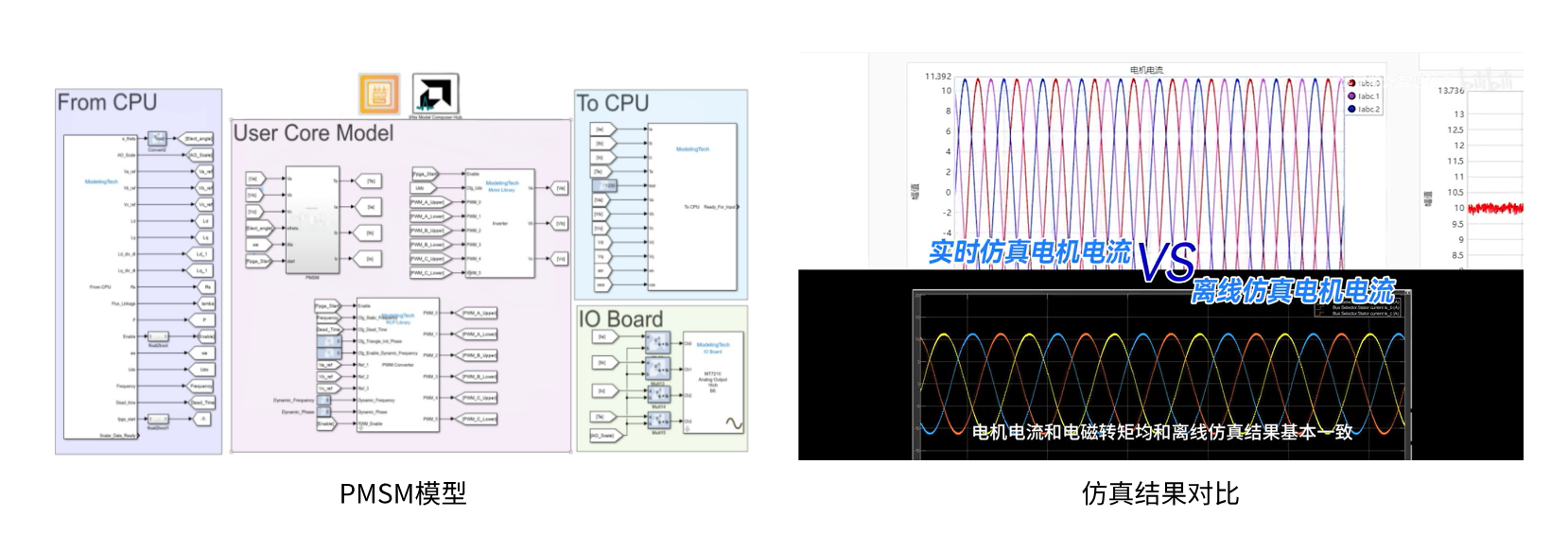
The observed waveforms show that motor current and electromagnetic torque are highly consistent with offline simulation results. Leveraging the CPU-FPGA interaction interfaces and diverse functional modules provided by FPGALab, users can customize and implement various motor models on this platform.

Traction drive system simulation
Electric drive controller simulation
Simulation and testing of MCU
Simulation and testing of OBC

MEA power systems
Satellite power supply system simulation

Leave a message or call to get more details about the product

Learn relevant concepts and technologies

Latest scientific research achievements in top academic journals

Rewarding events and competitions await your participation
Copyright ©上海远宽能源科技有限公司 沪ICP备11009377号-1